







![[Thảo luận] Tác hại khi phạt trẻ bằng đòn roi | Kỷ luật tích cực #18](https://vnmedia2.monkeyuni.net/upload/web/storage_web/09-04-2026_12:16:33_tac-hai-khi-phat-tre-bang-don-roi-ky-luat-tich-cuc.png)
.png)
.png)
Welcome back to the " Positive Discipline " series. This is the 18th installment in a series of 21 topics compiled based on the scientific foundation of Dr. Joan E. Durrant 's PDEP work .
This article will delve into the topic: " The harmful effects of corporal punishment on children ." The content focuses on analyzing the core factors affecting the psychology of both parents and children, thereby suggesting practical solutions based on mutual understanding and respect.
.png)
Video summarizing the article's content (AI)
Understanding the consequences of flogging.
The punishment of flogging from a psychological perspective.
From a psychological and developmental pediatric perspective, punishing children with corporal punishment (spanking, spanking) is not a method of education but rather an outburst of anger from adults . Physical punishment makes children feel humiliated, resentful, and fearful instead of understanding the lesson their parents want to convey.
Especially with infants, shaking or hitting them can cause extremely serious injuries such as broken bones, brain damage, or even death. A child's body and brain are very fragile, therefore corporal punishment has absolutely no place in child rearing.
Why did this happen?
Parents' resorting to corporal punishment often stems from internal and environmental pressures:
-
Fatigue and stress: When parents are sleep-deprived, hungry, or under immense pressure from life, they are more likely to lose control and vent their frustrations on their children.
-
Misunderstanding children's intentions: We often get angry thinking that children are deliberately misbehaving or challenging our authority. In reality, children are simply trying to explore the world and haven't yet grasped the complex rules of adults.
-
Mood instability: When parents' moods fluctuate (sometimes ignoring, sometimes punishing for the same behavior), children will feel confused, insecure, and anxious.
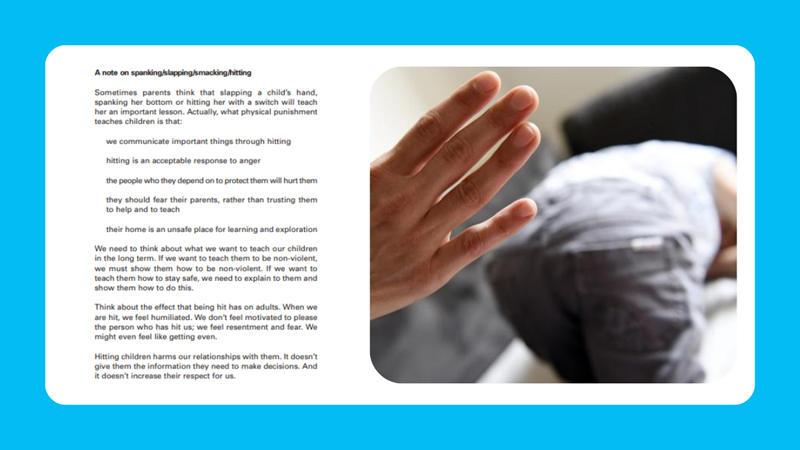
Dispelling misconceptions: Can corporal punishment really teach children?
Many people still believe in the saying "spare the rod and spoil the child," but science has proven the opposite:
-
Prejudice about parenting: Many parents think that hitting children will teach them important lessons, but in reality, corporal punishment only teaches children that violence is an acceptable way to deal with anger.
-
Prejudice regarding respect: Corporal punishment does not increase respect but only creates fear; children will become withdrawn and no longer trust their parents enough to learn from them.
-
Psychological consequences: Physical punishment deeply damages relationships, leading children to seek revenge or feel that home is no longer a safe place to learn.
Step-by-step guide to overcoming the temptation to discipline children with corporal punishment.
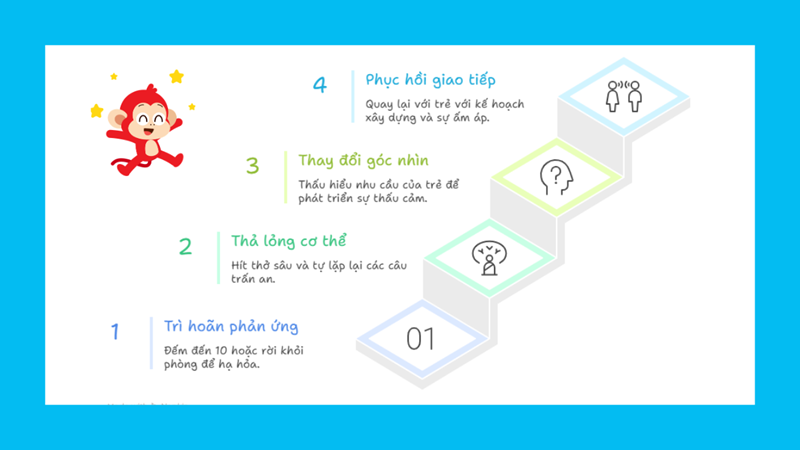
To prevent violent behavior, parents need to practice self-discipline through the following steps:
-
Step 1 - Delay your reaction: Count to 10 before saying or doing anything. If you're still too angry, leave the room temporarily to give yourself time to calm down.
-
Step 2 - Relax your body: Lower your shoulders, take deep breaths, and repeat reassuring phrases like "calm down" or "everything will be alright." This helps your nervous system exit the "fight or flight" state and return to logical thinking.
-
Step 3 - Change your perspective: Try looking at the situation from the child's point of view and ask yourself why the child acted that way. When you understand the child's needs, anger will gradually give way to empathy.
-
Step 4 - Restoring Communication: Only return to the child when you have planned a constructive response, ensuring you provide sufficient warmth and guidance. Use this difficult situation as an opportunity to teach your child how to resolve conflict verbally instead of violently.
How to apply positive discipline according to age
For a comprehensive overview of applying positive discipline methods according to age groups, parents are invited to refer to other articles in the " Positive Discipline " series here:
|
STT |
Article title |
Article |
|
1 |
Positive Discipline Parenting Methods |
|
|
2 |
How to raise a child aged 0-6 months using Positive Discipline. |
|
|
3 |
How to raise a 6-12 month old child using Positive Discipline. |
|
|
4 |
How to raise 1-2 year old children using Positive Discipline. |
|
|
5 |
How to raise 2-3 year old children using Positive Discipline. |
|
|
6 |
How to raise children aged 3-5 using Positive Discipline. |
|
|
7 |
How to raise children aged 5-9 using Positive Discipline. |
|
|
8 |
How to raise children aged 10-13 using Positive Discipline. |
|
|
9 |
How to raise children aged 14-18 using Positive Discipline. |
Frequently Asked Questions
1. Why do parents often tend to want to hit their children when they cry incessantly or misbehave?
Parents often feel exhausted, stressed, or anxious, leading them to vent their frustrations on their children. Additionally, adults often mistakenly believe that children are deliberately trying to anger them, when in reality, children don't understand their parents' emotions.
2. How dangerous is it to hit or shake a baby?
A baby's body and brain are very fragile, so shaking or hitting them won't stop them from crying and can cause brain injury, broken bones, or death. Instead of violence, babies need to be hugged and comforted to know that you are always there for them.
3. What long-term lessons does corporal punishment teach children?
Physical punishment teaches children that violence is an acceptable way to resolve anger and that important things need to be communicated through fighting. This instills fear instead of trust in parents, turning the home into an unsafe place to learn.
4. Why doesn't corporal punishment make children respect their parents more?
Hitting children causes feelings of humiliation, resentment, and even a desire for revenge, similar to how adults feel when they are physically abused. It destroys relationships and fails to provide children with the necessary information to make informed decisions.
5. What should I do when I feel like I'm about to lose control and want to hit my child?
Count to 10, take a deep breath, and temporarily leave the room to calm yourself down. Then, try to see the situation from the child's perspective to plan a response based on empathy and communication instead of corporal punishment.

Corporal punishment may stop a child's behavior immediately out of fear, but it will leave lasting psychological scars. Instead, parental patience and self-discipline are the best role models for children to learn how to manage their emotions.
Don't forget to take care of yourself by getting enough sleep and eating properly to have more energy to cope with daily stress. If you feel overwhelmed, proactively seek help from family, friends, or healthcare professionals.
To optimally support your child's development, parents can combine it with a modern educational roadmap from Monkey Junior . Download the app today to help your child access language and thinking skills naturally and effectively through scientifically designed lessons.
|
Monkey Junior is an English learning app specifically designed for children aged 0-11 , built on advanced early childhood education methods such as Glenn Doman and Multisensory learning . The program provides a vast vocabulary database covering many familiar topics, helping children not only recognize written words but also understand their deeper meanings through vivid images, sounds, and videos. With a personalized learning path tailored to each age and level, Monkey Junior helps children build a solid language foundation, develop logical thinking , and foster a natural love of learning from their early years. What sets Monkey Junior apart is its high level of interactivity with thousands of engaging educational games , allowing children to "learn through play and play through learning" without feeling pressured.
In particular, the application integrates artificial intelligence (AI) technology to help assess and correct pronunciation to sound like a native speaker, supporting children in practicing their listening and speaking skills in the most accurate way. With just 10-15 minutes a day, parents can confidently accompany their children on their journey to mastering a foreign language right at home, preparing them with the best foundation to become global citizens in the future.
|







![[Thảo luận] Cơn thịnh nộ (ăn vạ) của trẻ | Kỷ luật tích cực #17](https://vnmedia2.monkeyuni.net/upload/web/storage_web/09-04-2026_12:04:28_con-thinh-no-va-an-va-cua-tre-ky-luat-tich-cuc.png)




.png)